
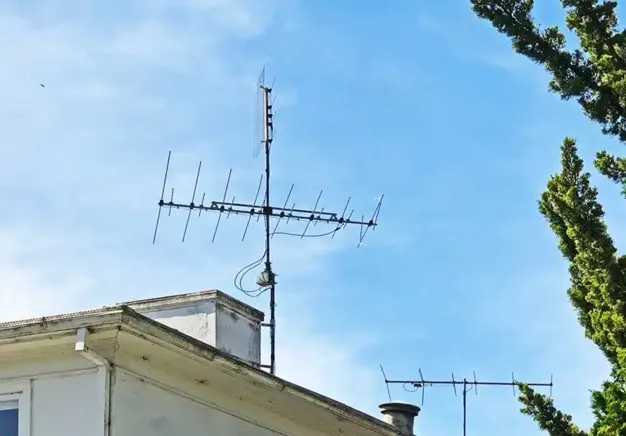
Many homeowners assume that all TV aerials are the same and that any model will deliver the same signal quality. This assumption causes frequent reception problems. The reality is that there are different TV aerials designed for different signal strengths, property types, and installation environments. It serves as a practical buyer-education and decision-support guide, explaining the types of TV aerials available and how each option matches specific reception conditions.
Choosing the wrong aerial type is one of the most common causes of weak signal, pixelation, and channel loss, especially in areas with variable transmitter coverage. Understanding the correct aerial category before installation prevents unnecessary upgrades, signal boosters, or repeat call-outs.
Indoor TV Aerials
Many people choose an indoor TV aerial for temporary setups. It suits rented homes and quick installations. No drilling or roof access is required. An internal TV aerial, often called a plug-in aerial or portable TV aerial, receives signals from inside the property.
These small TV aerials can work well in strong signal areas. They perform better near a window facing the transmitter. Signal strength must already be high. Low obstruction improves reception.
Walls and insulation weaken signals. Metal structures block transmission. Nearby buildings reduce coverage. Wi-Fi routers and LED lights create interference. Indoor aerials are a conditional solution. They work only where transmitter distance and property structure allow strong signal penetration. They do not replace an external aerial in weak or moderate signal areas.
Outdoor TV Aerials
An outdoor TV aerial is the baseline standard for reliable television reception in the UK. Most professional installations use an external TV aerial because consistent signal strength depends more on positioning than brand choice. A roof TV aerial receives signals above ground-level obstructions. Height improves line-of-sight access to the transmitter. Clear exposure reduces signal blockage from walls, insulation, and neighbouring buildings.
Signal reliability improves when the aerial is mounted higher. Elevation reduces interference from household electronics. Outdoor placement also limits signal absorption caused by internal wiring routes. The result is stable channel reception across multiplex frequencies.
An external TV aerial delivers fewer dropouts and reduced pixelation. It performs better in moderate and weak signal areas. It also supports multi-room distribution with lower signal loss. For long-term performance and consistent viewing quality, a roof-mounted system remains the standard installation method.
Loft TV Aerials
Many homeowners choose a loft TV aerial because they do not want an external aerial visible on the roof. A loft-mounted aerial, also called an attic TV aerial, is installed inside the loft space to preserve the property’s exterior appearance while still capturing broadcast signals. This approach balances discretion with functionality, allowing the aerial to remain hidden yet connected to internal wiring.
Loft installations, however, come with limitations. Roof insulation, foil-backed materials, and dense roof tiles can weaken signals before they reach the aerial. The loft space itself can introduce interference from heating pipes or electrical cabling. While convenient and visually unobtrusive, loft TV aerials often perform below the reliability of outdoor-mounted systems, particularly in areas with moderate or weak signal strength.
High-Gain TV Aerials
A high-gain TV aerial does not create a stronger signal but focuses and amplifies the reception from the transmitter. Also called a long-range TV aerial or strong signal aerial, it directs energy in a narrow path to capture distant signals. More gain can help in rural areas or locations far from the transmitter, improving reception where standard aerials fail.
However, excessive gain can be harmful. Over-amplifying signals in strong coverage areas can introduce interference and distortion. Precision and alignment are more important than gain alone. Even a high-gain aerial performs poorly if it is misaligned or obstructed by buildings, trees, or roof structures. Proper positioning ensures consistent reception and reduces dropouts in weak signal environments.
Wideband TV Aerials
Wideband TV aerials, also called wideband Freeview aerials, are designed to handle modern broadcast changes across multiple frequencies. Unlike older aerials that target specific channels, wideband aerials can receive a broad range of signals without needing multiple models. This frequency flexibility ensures they work reliably even if broadcasters adjust channel allocations in the future.
The main benefit of a wideband aerial is future-proofing. They are ideal for new installations or properties in areas where transmitter frequencies may change. By covering a wide spectrum, these aerials reduce the need for replacements or upgrades, ensuring stable reception and compatibility with evolving digital TV services.
Grouped TV Aerials
Grouped TV aerials, also called transmitter group aerials or frequency group aerials, are precision tools for targeted signal reception. They are not outdated technology. When matched to the local transmitter group, they can deliver stronger and more stable signals than wideband aerials. This makes them especially useful in areas where certain frequency ranges dominate or where interference from other channels is common.
These aerials focus on a narrow frequency range, which reduces interference from unwanted signals. The wrong group or poor alignment can weaken reception, cause pixelation, or result in dropped channels. Proper setup requires understanding the local transmitter layout and signal strengths.
Grouped TV aerials provide a specialist solution for reliable TV reception. They are ideal for locations with predictable broadcast patterns or strong signals in a specific frequency band. When installed correctly, they ensure consistent performance and fewer interruptions compared to standard wideband aerials.
Log Periodic TV Aerials
Log-periodic TV aerials, also called modern TV aerials or low-interference aerials, are designed for consistent, reliable signal reception. In urban areas, steady signal quality matters more than raw strength due to surrounding buildings, reflections, and electronic interference. These balanced signal aerials resist electrical noise from Wi-Fi routers, LED lights, and other household devices, maintaining clearer reception.
Installers often prefer log periodic aerials for flats, dense housing, or areas with variable signal coverage. Their digital TV aerial design provides stability across multiple frequencies, making them suitable for challenging urban environments. Properly installed, log periodic aerials reduce dropouts, improve picture quality, and ensure long-term performance even where signal conditions fluctuate.
Yagi TV Aerials
Yagi TV aerials, also called directional TV aerials or traditional TV aerials, are the classic solution for focused signal reception. Despite newer designs, they remain relevant because of their strong directional focus and ability to capture weak signals from distant transmitters. A Yagi aerial, sometimes referred to as a long boom aerial or focused signal aerial, has a narrow reception range, which helps reduce interference from unwanted channels.
These aerials perform best when precisely aligned with the transmitter. Their design ensures stable reception in areas where signal direction is predictable. Yagi TV aerials are still widely used for rural properties or locations where focused, long-distance reception is needed.
Why Different Types of TV Aerials Exist
Signal issues are often blamed on the television, but the real cause usually comes from environmental and structural factors. Terrain interference, building materials, and transmitter distance all affect reception. Even houses in the same postcode can experience very different signal strengths.
Different TV aerial types exist to match these varying conditions. Some are designed for long-distance reception, while others suit loft or indoor installation. High-gain or grouped aerials focus on specific frequencies, whereas wideband models cover multiple channels. Accessories such as signal boosters, mounting brackets, and coaxial cables can also affect performance.
This variety ensures that each property can achieve reliable reception. No single aerial can work perfectly everywhere, so having the right type and compatible accessories is essential for stable TV signals.
Which TV Aerial Type Is Best for Your Property?
Choosing the best TV aerial for your home depends on location, property type, and signal strength. In urban areas with strong signals, an indoor or loft-mounted aerial may be sufficient. For flats or apartments, a log periodic aerial works well because it handles variable signals and resists interference from neighbouring electronics.
In rural areas or properties far from the transmitter, a high-gain or Yagi aerial is often necessary. These long-range aerials focus on distant signals and reduce dropouts. Roof-mounted external aerials generally provide the most reliable reception for houses with obstructed views or multiple rooms.
Property type also matters. Loft aerials suit homeowners who prefer a discreet installation. External aerials are better for detached homes or houses surrounded by trees. By considering location, property layout, and local signal conditions, you can select the aerial type that ensures consistent performance and minimal signal loss.
Professional Installation Considerations
Having the right TV aerial is only part of the solution. Professional aerial installation ensures that the equipment delivers its full potential. DIY setups often result in poor alignment, loose connections, or unsafe mounting, which can reduce signal quality and cause long-term damage.
Professional installers focus on aerial alignment, secure mounting, and thorough signal testing. They follow safe installation practices and comply with Ofcom regulations. This helps prevent accidents and keeps the aerial working effectively for the long term.
Correct aerial selection combined with expert installation provides stable TV viewing. A well-chosen aerial, installed safely and tested properly, delivers consistent channels, fewer dropouts, and long-term performance.
Frequently Asked Questions
What are the different types of TV aerials?
The main types of TV aerials are indoor, loft, outdoor, high-gain, wideband, grouped, log periodic, and Yagi aerials.
Which type of TV aerial is best for my home?
The best TV aerial depends on location, property type, and signal strength. Indoor or loft aerials suit strong urban signals, while high-gain, Yagi, or roof-mounted outdoor aerials are better for rural or weak-signal areas.
What is the difference between a log periodic and a Yagi TV aerial?
A log periodic aerial offers consistent, low-interference reception across multiple frequencies, ideal for urban areas. A Yagi aerial is directional with a narrow focus, best for long-distance or rural signals.
What is the difference between indoor and outdoor TV aerials?
Indoor aerials are small and used inside for strong signals. Outdoor aerials are roof-mounted for stronger, more reliable reception.
Do I need a professional to install a TV aerial?
Yes. Professional installation ensures correct alignment, safe mounting, and a reliable signal. DIY setups often reduce performance and carry safety risks.