
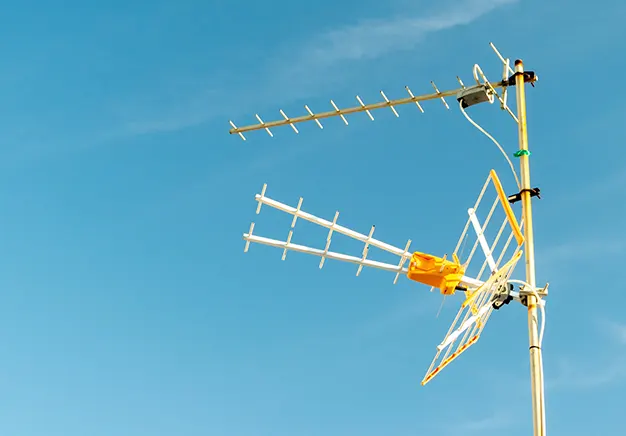
A TV aerial is a device that receives broadcast TV signals from local transmitters and delivers them to your television. It allows homes to access terrestrial television without needing a subscription. Most UK households use a Freeview aerial to watch a wide range of free digital channels, including news, entertainment, and children’s programming.
The aerial works by capturing over-the-air TV signals and converting them into a format your TV can display. Good digital television reception depends on the quality, placement, and strength of signals in your area.
This page will cover how a TV aerial functions, the main types available, recommended placement, and common issues that can affect signal quality. Understanding these points helps ensure a reliable TV viewing experience.
How Do TV Aerials Work?
TV channels are transmitted from a broadcast tower as radio frequency signals. These signals travel through the air and can cover several kilometres, depending on the transmitter’s power and frequency. A TV aerial captures these signals using specially designed antenna elements that pick up the correct frequencies for terrestrial television.
Once the signal is received, it travels through a coaxial cable to the television. The TV’s tuner decodes the signal into Audio and video, allowing channels to appear on the screen. This process converts invisible TV aerial signals into clear pictures and sound.
Factors such as the aerial’s design, quality, and placement affect the strength and stability of the signal. Ensuring proper TV aerial reception reduces interruptions, prevents pixelation, and maintains consistent channel availability.
Types of TV Aerials
Not all TV aerials are the same. The choice depends on signal strength, location, and property type. Homes near a transmitter may only need a simple aerial. Areas with weak signals require larger, higher-gain aerials for stable reception.
Common categories of TV aerials include indoor TV aerials, which are small and fit lofts or rooms. Outdoor TV aerials are mounted on roofs, chimneys, or walls. They capture signals more effectively over long distances. Digital TV aerials are designed for modern high-definition broadcasts. They provide a clear reception for Freeview and other terrestrial channels.
Choosing the right aerial improves TV aerial reception. It reduces channel loss and ensures consistent picture and sound quality.
TV Aerial Placement & Alignment
The TV aerial position directly affects signal strength and picture stability. The aerial must be installed at the correct height and in an open location. Obstacles such as nearby buildings, trees, or metal structures can block or reflect signals. Higher aerial height often improves access to cleaner signals and reduces interference.
Accurate TV aerial alignment is essential for stable reception. The aerial must face the correct transmitter direction to capture the strongest broadcast signal. A slight change in angle can reduce signal quality and cause freezing, pixelation, or missing channels.
Transmitters broadcast signals in set directions. A clear line of sight between the aerial and the transmitter improves reliability. Proper positioning and careful alignment support consistent reception and effective signal optimisation for digital television.
Common TV Aerial Signal Problems
Many households experience pixelation, frozen pictures, or missing channels. Some see a “no TV signal” message appear without warning. These are common TV aerial signal problems linked to reception quality.
Poor TV reception often occurs when the signal reaching the aerial is weak or unstable. This may result from distance from the transmitter, surrounding buildings, or physical obstructions. Signal interference from nearby structures can also reduce clarity.
Weather conditions affect reception strength. Heavy rain, strong winds, or storms can disrupt signals temporarily. Wind may also shift aerial alignment, causing TV signal loss.
Equipment condition plays a key role. Damaged cables, loose connections, corroded aerial elements, or ageing components reduce signal reliability. When signal strength drops below the required levels, channels may disappear or display errors such as no TV signal.
When Do You Need a New TV Aerial?
A TV aerial can degrade over time due to weather exposure and ageing materials. Metal elements may corrode. Mounting brackets can loosen. Cables can crack or wear. An old TV aerial may lose efficiency and struggle to capture stable signals.
Several signs indicate you may need to replace a TV aerial. Channels may disappear without reason. Picture quality may break up regularly. You may see repeated “no signal” messages. Reception may worsen during mild weather, not just storms. These issues often suggest reduced signal capture performance.
A TV aerial upgrade may also be required for compatibility with modern digital and HD services. Older aerials were designed for analogue transmission. A new TV aerial supports current digital frequencies and improves reliability for high-definition broadcasts.
Safety & Signal Regulations
TV aerial safety is critical during installation and maintenance. Most aerials are fitted on roofs, chimneys, or high walls. Working at height increases the risk of falls and injury. Secure mounting is essential to prevent structural damage or collapse in strong winds.
Cabling must also be installed correctly. Poor routing can create trip hazards or electrical risks. Loose or exposed cables may allow water ingress, which affects signal stability and equipment lifespan. Safe handling reduces the risk of damage to property and reception systems.
UK TV aerial regulations require installations to follow recognised safety standards. This includes secure brackets, stable masts, and compliant signal distribution methods. Proper aerial installation safety ensures both physical protection and reliable digital reception performance.