
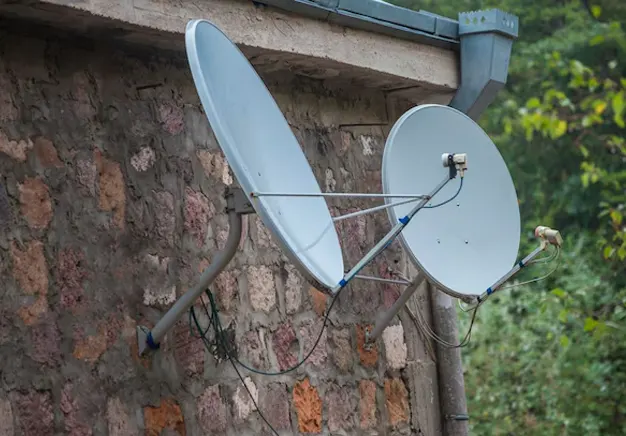
A satellite system receives television signals from orbiting satellites and delivers them to a TV. The system includes four main components: a satellite dish, an LNB (Low-Noise Block converter), coaxial cabling, and a satellite receiver. The dish captures the signal from the satellite. The LNB converts the signal into a lower frequency. The signal then travels through the cabling to the receiver, which processes it and displays the channels on the television. This structure forms the basis of modern satellite TV systems.
Different types of satellite systems exist because properties have different requirements. The correct satellite system types depend on factors such as property size, number of televisions, and whether the service is subscription-based or free-to-air. System choice also differs between residential satellite systems and commercial satellite systems. Homes often use simple or multi-room satellite setups, while apartment buildings and hotels may use a communal satellite system to distribute signals to many users.
Choosing the right satellite TV system improves signal reliability and installation flexibility. A properly planned system supports stable reception and allows easier expansion when additional televisions or services are required.
Single-Output Satellite Systems
A single-output satellite system is a basic satellite installation designed for one television. The system uses a single LNB system that provides one signal output to a receiver. The satellite dish captures the signal, and the LNB sends it through a single coaxial cable. The cable connects to one receiver, which supplies a single TV connection for viewing satellite channels. This structure forms a single TV satellite system where one receiver controls channel selection for one screen.
This basic satellite setup suits properties with simple viewing needs. It is common in small households, studio flats, and rooms with a single-room TV installation. The system provides direct-to-TV satellite reception without additional signal distribution equipment.
A single-output satellite system offers several advantages. The installation remains straightforward because it uses fewer components. Equipment requirements stay lower compared with multi-room installations. The simple design also makes the system easier to install, maintain, and troubleshoot while providing stable satellite reception for one television.
Multi-Room Satellite Systems
A multi-room satellite system distributes satellite signals to several televisions within one property. The system allows a multiple TV satellite setup where each room connects to the satellite dish through its own cable. This design forms a whole-house satellite system that delivers satellite channels to different rooms.
Multi-room systems use specific LNB types that provide several outputs. Common options include Twin, Quad, and Octo LNB units. A Twin LNB provides two outputs, a Quad LNB provides four outputs, and an Octo LNB provides eight outputs. Each output connects to a separate receiver through its own coaxial cable. This structure supports a multi-TV setup without signal conflict.
A key feature of distributed satellite TV is independent viewing. Each receiver controls its own channel selection and recording functions. One room can watch sports while another watches films at the same time. Independent control exists because each receiver receives a dedicated signal feed.
A multi-room satellite system requires separate cables from the dish to each receiver. Satellite receivers do not share the same signal line. Each connection operates independently to maintain stable signal delivery and full receiver control. Larger properties sometimes expand this concept into structured systems such as MATV or SMATV, which support organised multi-room distribution across multiple rooms or buildings.
Sky Q Hybrid Systems
A Sky Q hybrid system is a satellite television setup that uses wideband LNB technology. The system forms the basis of a modern Sky Q satellite system used for advanced viewing features. The wideband LNB sends two wideband signals from the satellite dish to the main Sky Q receiver. This configuration supports improved channel handling and recording functions compared with a standard satellite setup.
A Sky Q setup differs from traditional LNB systems because it does not rely on multiple standard outputs for each receiver. Instead, the wideband LNB provides dedicated signal feeds designed specifically for Sky Q equipment. The system then distributes television services through the main receiver and additional Sky Q boxes within the property.
The Sky Q multi-room feature allows televisions in different rooms to access the same subscription service. Additional Sky Q Mini boxes connect to the main receiver and stream live channels or recordings across the home network. This design allows flexible viewing in multiple rooms without installing separate satellite receivers for each television.
A Sky Q hybrid system requires compatible equipment to operate correctly. The installation needs a wideband LNB, a Sky Q main receiver, and approved Sky Q Mini boxes for multi-room viewing. Standard satellite receivers and traditional LNB systems do not support Sky Q functionality.
Freesat Satellite Systems
A Freesat satellite system is a free-to-air satellite television service that provides channels without a monthly subscription. The system receives broadcast signals from satellites and delivers them through a standard satellite dish installation. A typical Freesat setup includes a satellite dish, LNB, coaxial cabling, and either a Freesat box or a Freesat TV with a built-in receiver.
The installation uses the same basic equipment found in many satellite TV systems. A standard satellite dish captures the signal, and the LNB sends it through a cable to the Freesat receiver or compatible television. Once connected, the Freesat box or integrated Freesat TV processes the signal and displays the available channels.
A key advantage of a Freesat satellite system is the absence of a subscription fee. Viewers access a wide range of free channels, including many in HD resolution, after the initial installation. The physical infrastructure remains similar to other satellite installations, which means an existing dish and cabling often support a Freesat setup with only a compatible receiver or television required.
Communal Satellite Systems (IRS Systems)
A communal satellite system, also called an IRS system (Integrated Reception System), distributes satellite and television signals across an entire building. The system uses a single central satellite dish connected to shared distribution equipment. The signal travels through structured cabling to provide television access in multiple flats or units. This design forms a building-wide TV system that supports many residents from one installation.
An IRS system is common in apartment satellite installations, residential blocks, and other multi-dwelling satellite properties. Instead of installing separate dishes for each flat, the system uses one central reception point. The signal then reaches each property through a managed shared satellite system.
The infrastructure includes signal amplification and organised distribution equipment. Central racks contain amplifiers, multiswitches, and control modules that manage signal levels and routing. These components ensure stable distribution throughout the building. Larger systems may also integrate MATV (Master Antenna TV) or SMATV networks, which combine terrestrial and satellite signals within the same structured communal satellite system.
Commercial Satellite Systems
A commercial satellite system is a satellite television installation designed for business environments. The system distributes satellite signals across multiple viewing points within a property. This setup supports reliable business satellite TV delivery in large or complex buildings.
These systems operate in environments such as hotels, pubs, offices, sports venues, and hospitality spaces. A typical hotel satellite TV installation provides channels to guest rooms, lounges, and reception areas. Similarly, an office satellite setup may deliver news or broadcast channels to meeting rooms, waiting areas, or staff facilities.
A large-scale satellite installation uses rack-mounted distribution equipment to manage signals efficiently. Central equipment racks contain multiswitches, amplifiers, and signal processors. These components distribute the satellite signal to many televisions across the property. The system uses centralised signal management to maintain stable reception and organised channel distribution.
This structure forms professional satellite systems suitable for multi-room and multi-property satellite environments. The design allows controlled signal routing, consistent picture quality, and efficient management of multiple viewing locations within commercial buildings.
Residential Satellite Systems
A residential satellite system provides television services to individual homes or flats. Installation depends on the property type, as houses and flats have different space constraints. In homes, there may be room for a larger dish or flexible roof mounting, while flats often require smaller or discreet setups to meet building regulations.
Many homeowners prefer a discreet installation, keeping the dish visually unobtrusive. This can involve roof-mounted dishes hidden from view or garden-mounted dishes positioned away from sightlines. These options maintain the property’s aesthetics while ensuring reliable reception.
System choice also depends on household size and viewing needs. Single-occupancy homes often use a simple single-dwelling satellite setup for one television. Larger homes may require a home multi-room system with domestic LNB systems capable of feeding multiple receivers. Proper planning ensures the home satellite system provides stable, flexible, and long-term service for domestic television viewing.
Motorised Satellite Systems
A motorised satellite system uses a rotating satellite dish to access multiple satellites from a single installation. The dish is mounted on a motorised mechanism controlled by a satellite dish controller, allowing it to reposition automatically to different orbital positions. This creates a tracking satellite dish setup that can receive channels from several satellites without needing multiple fixed dishes.
A motorised dish setup is ideal for homes seeking international channels or for multilingual households where content is broadcast from satellites in different positions. By moving the dish precisely, the system delivers access to a wide range of satellite channels that a standard fixed system cannot reach.
This type of rotating satellite system involves a more complex configuration than standard installations. Installation requires careful alignment and programming, and switching between satellites is slower due to the physical movement of the dish. Despite this, a motorised satellite dish provides flexibility and coverage for users needing multiple satellite sources through one system.
Choosing the Right Satellite System
Choosing the right satellite system depends on the number of TVs, subscription preferences, and content needs. A single TV may only require a single-output satellite system, while homes with multiple rooms or businesses need a multi-room or commercial satellite system. Free-to-air options like Freesat suit basic viewing, while subscription services such as Sky Q satellite systems offer premium channels and extra features. Properties requiring international or multilingual channels may benefit from motorised satellite systems to access multiple satellites.
Property type and long-term flexibility are also important. Houses can support larger or roof-mounted dishes, while flats may need discreet communal satellite systems or compact LNB setups. Choosing a system that allows future expansion, extra receivers, or multi-room distribution ensures reliable, flexible viewing over time. Considering these factors helps determine which satellite system to pick for a home or business, balancing current needs with future upgrades.
Frequently Asked Questions
What are the different types of satellite TV systems?
Satellite TV systems include single-output for one TV, multi-room for multiple TVs, and Sky Q hybrid for multi-room streaming. Freesat offers free channels, while motorised dishes access multiple satellites. Communal/IRS and commercial systems serve apartments and businesses.
What are communal satellite systems (IRS/MATV/SMATV)?
Communal satellite systems (IRS, MATV, SMATV) use a single central dish to distribute satellite and TV signals to multiple flats or units. They are common in apartment blocks or multi-dwelling properties. The system relies on amplifiers and distribution racks to deliver stable signals to each residence.
What is the difference between Sky Q and Freesat systems?
Sky Q is subscription-based with multi-room streaming and advanced features. Freesat is free-to-air, single-room, and requires a compatible box or TV.
Are commercial satellite systems different from residential systems?
Yes. Commercial satellite systems serve businesses with multiple TVs and centralised distribution, while residential systems are simpler, designed for homes with one or a few TVs.
Why should I hire a professional for satellite system installation?
Hiring a professional ensures safe installation, correct dish alignment, and reliable signal reception. They also provide secure cabling, fast fault diagnosis, and warranty-backed service for long-term performance.