
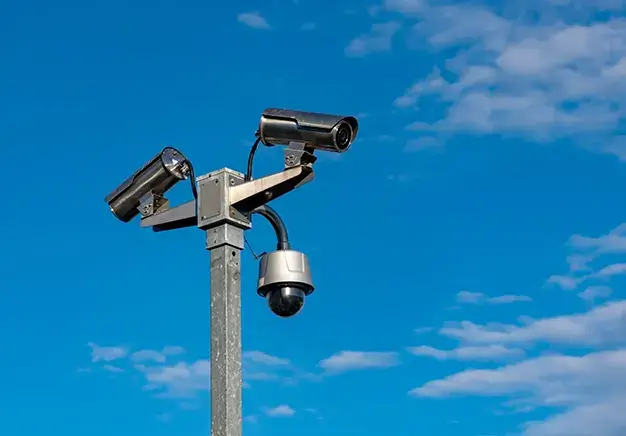
No, not all CCTV cameras are interchangeable, but many can be mixed and matched if they share the same underlying technology and protocols. Compatibility relies on signal types like analogue AHD or digital IP. Systems usually require ONVIF standards to ensure different brands communicate. Always verify your recorder supports the camera resolution before starting a CCTV installation.
CCTV Compatibility Based on Technology Type
A hard divide exists between different security systems. Analogue cameras cannot plug directly into IP networks, and digital IP cameras will not function on legacy analogue DVRs. This incompatibility stems from how each system processes video data and transmits signals.
Analogue units use coaxial cables, while IP models require network data cables. You must verify your CCTV technology before attempting any hardware upgrades or replacements. Mixing these formats without specific converters or hybrid recorders will lead to system failure. Always match the camera output to your existing recorder’s input capabilities.
DVR vs NVR Compatibility Rules
The type of recording device you use dictates which cameras you can install. Compatibility hinges on the signal transmission method and the specific hardware interface of the unit. Understanding these hardware limits ensures your system records footage reliably without signal loss.
- DVR Compatibility: A Digital Video Recorder requires cameras that match its specific analogue format, such as TVI, CVI, AHD, or CVBS.
- Universal Support: Choose Penta-brid or Hybrid DVRs if you need a recorder that accepts all major analogue formats.
- NVR Requirements: Network Video Recorders only function with IP cameras connected via a local network or PoE ports.
- Protocol Matching: Ensure your NVR and IP cameras both support ONVIF protocols for seamless brand integration.
- Resolution Limits: Verify that your chosen recorder can handle the maximum megapixel output of every connected camera.
Cable & Connector Compatibility
Physical infrastructure creates the foundation for system compatibility. Traditional analogue setups rely on coaxial cables and BNC connectors to transmit high-frequency video signals. In contrast, modern IP systems use Cat6 Ethernet cables with RJ45 connectors to handle digital data and power.
Mixing these two requires specific hardware. You can use video baluns to run analogue signals over twisted-pair Ethernet wiring. This professional method allows you to upgrade cameras without replacing existing cable runs. However, standard BNC connectors will never plug directly into a network switch or NVR without these adapters. Ensuring your cables match your hardware is essential for a stable signal.
Brand Compatibility & The ONVIF Standard
Mixing different camera brands is entirely possible, but it requires a shared communication standard to function correctly. The ONVIF protocol (Open Network Video Interface Forum) serves as this universal language for digital security hardware. If an IP camera and an NVR are both ONVIF-compliant, they can exchange data regardless of the manufacturer.
This standard allows you to integrate high-quality hardware from various industry leaders. You can combine devices from Hikvision, Dahua, Axis, and Hanwha Vision into a single, cohesive interface. Without this compatibility, proprietary software often blocks video signals from third-party devices, forcing you into a single-brand ecosystem.
Using standardised equipment ensures your system remains flexible for future expansions. However, you must confirm that both your camera and recorder support the same ONVIF profile (such as Profile S for video streaming). This verification guarantees that advanced features like motion detection and PTZ control work across different brands.
Can You Upgrade CCTV Cameras Without Replacing the System?
Upgrading your security is a cost-effective way for businesses to enhance property protection. You can often swap a 1080p camera for a 4K camera on your existing infrastructure to improve image clarity. However, this is only possible if your current recorder supports 4K decoding and higher bandwidth.
If your DVR or NVR is outdated, it may fail to display or record the higher-resolution footage. Checking the maximum supported resolution of your recording unit is the first step before purchasing new hardware. This targeted approach allows you to modernise critical areas without the expense of a full system overhaul. Always ensure your power supply can handle the requirements of newer, high-performance camera models.
Wireless vs Wired CCTV Compatibility
Integrating wireless Wi-Fi cameras into a hardwired PoE NVR system presents significant technical challenges. Most wired recorders are designed for direct physical connections and may not easily discover devices operating on a separate wireless frequency. This often requires complex network configuration or the use of specific bridge devices to ensure stable communication.
If you are looking for reliable alternatives that bypass these connectivity hurdles, you may want to explore a CCTV system with no Wi-Fi. These setups eliminate the risks of signal interference and provide a more secure, closed-circuit environment. For businesses, a hybrid approach is possible but usually requires a specialised NVR that supports both physical ports and network-based wireless streams. Always check your recorder’s channel capacity before attempting to add wireless units to a wired backbone.
When You Should Replace the Entire CCTV System
Specific scenarios require a full system overhaul rather than simple hardware swaps. You should consider a complete replacement when legacy wiring begins to fail. It is also needed when your security requirements outgrow the channel limits of your current recorder. For businesses and homeowners in London, upgrading to a modern system ensures access to the latest AI analytics and remote monitoring features.
If you require a scalable solution for your business premises, our team provides expert commercial CCTV installation tailored to high-traffic environments. For those looking to protect their homes with the latest smart technology, we also offer bespoke residential CCTV installation throughout London. Replacing an ageing system removes the vulnerabilities of outdated firmware. It also provides a reliable foundation for your property’s long-term security. Always consult a professional to determine if your existing infrastructure can support the bandwidth of modern high-definition surveillance.