
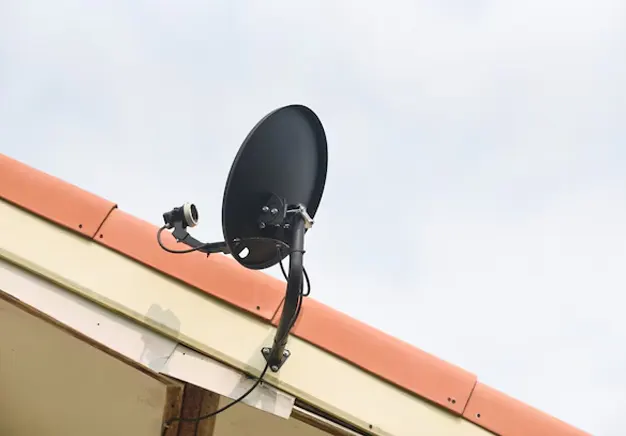
A satellite dish is a dish-shaped antenna that receives television signals from orbiting satellites. The curved reflector collects weak signals and directs them to a receiver. This process supports digital television transmission and stable satellite reception.
A satellite dish differs from a TV aerial. A TV aerial captures signals from ground transmitters. A satellite TV dish receives broadcast signals from satellites positioned in Geostationary orbit. The orbit remains fixed above the same Earth location. This position allows continuous digital broadcast signal transmission to homes.
A typical digital satellite dish forms part of a satellite reception system. The dish antenna focuses signals from an orbiting satellite onto a receiver component. The receiver then converts the broadcast signal into digital television channels.
Satellite Equipment
A satellite system uses specific equipment to receive and deliver TV signals. The main component is the satellite dish, which collects signals from geostationary satellites. The LNB is fixed on the dish arm and converts the signal for transmission to the receiver.
The satellite equipment also includes a receiver box and coaxial cables. The receiver decodes the signal into digital television channels, while the cables carry the signal safely between all components. Proper installation of this equipment ensures stable reception and clear picture quality.
How Satellite Dishes Work
Satellite dishes capture broadcast signals transmitted from satellites in geostationary orbit. Communication satellites send digital television signals toward the Earth. The curved surface of the dish antenna reflects these signals to a receiver component. This process forms the basic satellite TV signal process.
The dish must face the correct satellite position. Accurate satellite dish alignment improves signal strength and picture stability. Installers adjust direction, elevation, and tilt for precise reception. Correct alignment ensures the dish focuses signals from a satellite in Geostationary orbit.
Weather conditions can influence signal quality. Heavy rain or dense clouds reduce signal strength temporarily. This effect occurs because moisture absorbs part of the broadcast signal during transmission. Proper installation and alignment reduce reception loss during poor weather conditions.
The Role of the Satellite Dish
The satellite dish reflects and concentrates signal waves from a communication satellite. The curved reflector collects weak broadcast signals and directs them toward the receiver unit. This process forms the core function of a satellite reception system for digital television transmission.
Correct positioning determines signal stability and reception quality. The dish must face the correct satellite orbital slot for reliable signal capture. Installers adjust direction and elevation so the dish points toward satellites located in Geostationary orbit.
Mounting stability supports consistent signal performance. A firmly mounted dish maintains accurate alignment during daily weather exposure. Strong wind or vibration can shift the dish direction if the mounting brackets remain loose or unstable.
Signal Path to Your TV
- Satellite: A communication satellite in Geostationary orbit transmits digital broadcast signals toward Earth.
- Satellite Dish: The dish antenna receives the signal and reflects it toward the focal point.
- LNB: The Low Noise Block (LNB) collects the signal and converts it to a lower frequency.
- Coaxial Cable: The converted signal travels through a coaxial cable from the dish to the receiver.
- Receiver / Satellite Box: The receiver decodes the signal into digital television channels.
- TV: The television displays the decoded picture and audio from the satellite broadcast.
Types of Satellite Systems
Different satellite systems provide different channel access and services. Subscription-based services like Sky offer paid channel packages with premium content. Free-to-air systems like Freesat provide channels without monthly fees. European systems such as Astra and Hotbird deliver international channels across different regions
Sky vs Freesat vs European Satellite TV
Satellite television services differ by subscription model, channel availability, and equipment requirements. The three common systems include Sky, Freesat, and European satellite broadcasting from Astra satellites or the Hotbird satellite. Each option uses a satellite reception system but operates with different service structures.
Sky operates as a subscription satellite TV service. Viewers access Premium entertainment, sports, and movie channels through a monthly package. The system requires a compatible satellite dish, receiver box, and an active subscription account.
Freesat provides free-to-air digital satellite television channels. Users receive national television and radio channels without subscription fees. The system requires a satellite dish, a Freesat-compatible receiver, and correct dish alignment toward Astra broadcast satellites.
European satellite TV focuses on international free-to-air channels. Many broadcasts originate from Astra and Hotbird satellites across Europe. Viewers access foreign news, cultural, and entertainment channels if the satellite dish aligns with the correct orbital position and receiver compatibility supports those signals.
Satellite Installation Services
Professional satellite installation ensures reliable signal reception and uninterrupted television viewing. Skilled engineers handle all types of installations, replacements, and upgrades, maintaining correct alignment and system performance.
- New Dish Installation: Professional installation of a new satellite dish for optimal signal reception.
- Dish Replacement: Remove and replace old or damaged dishes to restore reliable satellite TV service.
- LNB Upgrades: Install or upgrade LNBs (Single, Twin, Quad, Octo) to support multiple receivers.
- Multi-Room Setup: Configure satellite signals to feed several TVs from a single dish.
- Realignment: Adjust dish direction and elevation to improve signal strength and picture quality.
Satellite Systems for Commercial Properties
Commercial properties like hotels, schools, offices, shopping centres, and warehouses need advanced satellite systems. They use Integrated Reception Systems (IRS) to distribute signals efficiently to multiple rooms or areas through a central dish and cabling network.
IRS systems are scalable for small or large buildings. They ensure every room receives clear satellite signals while reducing the need for multiple dishes and simplifying maintenance.
Satellite Systems for Residential Properties
Residential properties such as houses, flats, and rental units use satellite systems for digital television reception. These systems provide access to national, international, and HD channels. Installation is often discreet. Dishes and cabling are positioned to minimise visual impact while maintaining correct alignment. This ensures reliable signal reception without affecting the property’s appearance.
Why Choose a Professional Satellite Installer?
Excel Solutions provides certified satellite installers for safe and reliable installations. They handle roof access carefully, reducing risk during the mounting and alignment of your satellite dish.
Our engineers ensure precise dish alignment toward geostationary satellites for strong and stable signal reception. We use professional signal testing equipment to verify reception before completing the job. Cables are routed securely to avoid damage and maintain a neat installation.
Excel Solutions offers warranties and guarantees on equipment and installation work. Our team performs fast fault diagnosis to quickly resolve any signal or receiver issues.
Choose Excel Solutions for professional satellite installation and enjoy uninterrupted digital television reception with expert support every step of the way.