
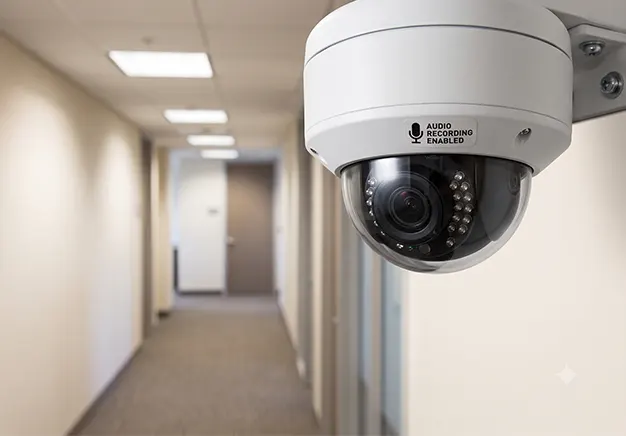
Modern CCTV cameras record audio via built-in microphones or external inputs. However, this capability is strictly regulated by UK law. While security cameras capture clear sound alongside video, doing so legally requires strict privacy compliance. This ensures you do not unlawfully record private conversations.
UK Laws on CCTV Audio Recording
Audio recording is considered highly intrusive under UK GDPR. The Information Commissioner’s Office (ICO) states that capturing sound requires a much higher legal threshold than video surveillance. Consequently, businesses cannot use audio to eavesdrop on staff or monitor workplace gossip. Homeowners face similar restrictions. They must disable audio if their cameras record beyond their property boundary. Unlawful recording can lead to severe ICO fines and civil legal action.
How Audio CCTV Systems Work
Audio CCTV systems rely on specialised hardware to capture sound alongside video footage. Modern IP cameras feature either a built-in microphone or an external audio input line. Built-in microphones are integrated directly into the camera housing for a compact setup. Conversely, external systems connect to separate, high-sensitivity microphones via audio cables. Both setups convert acoustic sound waves into digital data streams. The camera then synchronises this audio data directly with the video feed before transmitting the combined signal to a Network Video Recorder (NVR) or cloud storage.
Built-In Microphones vs. External Audio Devices
Most modern IP and turret cameras feature integrated, built-in microphones. These internal components require no extra cabling and draw power directly from the camera itself. In contrast, older analogue systems depend on separate external microphone hardware. These external devices require dedicated power sources and must be wired independently back to the DVR or NVR. Understanding these distinct CCTV components helps determine the complexity of your installation.
One-Way Listening vs. Two-Way Talk
One-way audio systems only allow for listening. They capture environmental sounds and store them alongside the video for later review and playback. Two-way audio introduces active communication. By using a smartphone app, users can listen in real time and also speak directly through the camera’s built-in speaker. This interactive technology lets you give instructions to a delivery courier or warn off an active intruder.
Advanced Audio Technologies in Modern CCTV
Modern CCTV systems have shifted from basic hardware capture to advanced AI processing. Instead of just recording raw sound, smart security cameras use internal processors to analyse audio data in real time. These AI algorithms actively filter out background distractions like wind, traffic, or rain. This processing allows the camera to identify specific acoustic signatures, such as breaking glass, gunshots, or aggressive shouting. Once detected, the system can immediately trigger automated alerts, enabling swift security responses before an incident escalates.
AI Noise Reduction & Voice Isolation
Modern processors use intelligent algorithms to isolate human voices. These systems identify and suppress constant background distractions like wind and traffic. This precise filtering ensures the best quality CCTV systems deliver clear, intelligible speech. Security teams can accurately identify spoken words even in noisy outdoor environments.
Active Deterrence & Pre-Recorded Warnings
Active deterrence cameras use automated triggers to stop intruders. When someone crosses a perimeter line, the system flashes warning lights and sounds a siren. It also plays a sharp, pre-recorded voice warning. This immediate response scares off criminals and proves the property is actively monitored.
Audio Triggers
Some commercial cameras do not record audio constantly. Instead, they listen for sudden spikes in decibels or specific sound patterns. The system triggers video and audio recording only when it detects shouting, aggression, or breaking glass. This selective capture preserves storage space while ensuring critical security incidents are fully documented.
CCTV Audio Use Cases: Home vs. Business
Deploying audio hardware requires strict alignment with specific real-world environments to remain lawful. In residential settings, homeowners can use two-way audio components for gate intercoms or doorbell units to speak with delivery couriers.
Conversely, commercial operations use audio surveillance primarily for crime prevention in high-risk zones, such as bank teller windows or secure entry points. Businesses must never use this technology for general staff monitoring or in areas where a high expectation of privacy exists.
Home security & Video Doorbells
Smart video doorbells and residential CCTV systems use two-way audio to secure home entrances. Homeowners can speak directly with delivery drivers at the front door using a smartphone app. This hardware also allows users to warn off trespassers on driveways. Capturing clear sound provides vital real-time control, helping residents manage visitors safely.
Commercial & Retail Environments
Commercial CCTV systems with audio must target highly specific, legally justifiable zones. A primary use case is placing microphones directly at Point-of-Sale (POS) desks and cash registers. This specific hardware placement captures clear evidence of customer abuse or verbal threats, which helps protect retail staff and resolves transaction disputes. However, businesses must avoid installing these microphones in general staff breakout rooms or offices, as non-targeted commercial CCTV recording violates workplace privacy regulations.
How to Choose a CCTV Camera with Audio
Selecting the right hardware requires careful planning to ensure technical compatibility and full legal compliance. Use this final checklist before buying:
- Verify NVR Compatibility: Ensure your Network Video Recorder fully supports audio over IP or coax transmission channels.
- Assess Microphone Range: Match the microphone sensitivity to your specific target zone to avoid accidental over-recording.
- Confirm Storage Capacity: Budget for increased bandwidth and storage space, as continuous audio feeds expand file sizes.
- Order Legal Signage: Purchase compliant surveillance signs that explicitly state that audio recording is operational on the premises.
Ready to upgrade your security safely and legally? Our expert team provides professional CCTV installation across London. We design tailored, high-performance systems that protect your property while ensuring strict compliance with UK privacy laws.