
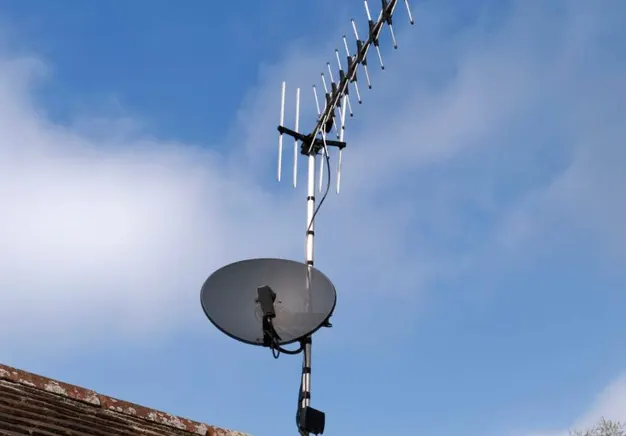
TV aerials and satellite dishes are primary systems for receiving television broadcast signals. Aerials capture terrestrial radio waves from ground-based transmitters. Dishes receive high-frequency microwave signals from satellites in geostationary orbit.
These technologies differ in technology, signal source, equipment cost, and overall performance. Terrestrial aerials provide access to Freeview services. Satellite dishes support Freesat or Sky services with international content.
Signal reliability varies based on environmental factors and property location. Aerial performance depends on the distance to local transmitters. Satellite signals require a clear line of sight to the southern sky.
This page compares both systems to help users choose the right reception option. Aerials suit urban areas with strong transmitter coverage. Dishes excel in rural regions where terrestrial signals are weak.
How the Technology Differs
TV aerials and satellite dishes differ fundamentally in their signal transmission and reception methods. These technologies operate on separate frequency bands to deliver digital television content to homes. Terrestrial systems utilise radio waves while satellite systems rely on microwave signals from space.
The following table compares the core technical attributes of both reception systems.
| Feature | TV Aerial Technology | Satellite Dish Technology |
| Signal Path | Ground-to-ground transmission | Ground-to-space-to-ground |
| Frequency Band | UHF (470–862 MHz) | K-band (10.7–12.75 GHz) |
| Transmission Type | Digital Terrestrial (DTT) | Digital Video Broadcasting (DVB-S) |
| Hardware Need | Directional Yagi antenna | Parabolic reflector and LNB |
| Line of Sight | Required to local mast | Required for the southern sky |
Tv Aerial
TV aerials facilitate terrestrial signal reception by capturing radio waves from ground-based masts. This system relies on a network of transmitters situated across the country. The signal path starts at the transmitter and travels directly to the rooftop aerial. From the aerial, the signal flows through a coaxial cable to the television.
Users connect this cable to the RF input located on the back of the TV. Most modern televisions contain built-in tuners to decode these specific terrestrial transmissions. Signal strength remains entirely dependent on the proximity to local transmitters. Distance and physical obstacles can significantly impact the quality of the received television picture.
Satellite Dish
Satellite dishes enable signal reception by capturing high-frequency microwaves from spacecraft in geostationary orbit. This technology provides a wide broadcast range that covers vast geographical areas. The signal path begins at the satellite and travels thousands of miles to the dish. The parabolic shape reflects these signals into a central Low Noise Block (LNB) converter.
A coaxial cable carries the processed data from the LNB to a dedicated receiver box. Most satellite systems require this external receiver to decode the encrypted microwave transmissions. The receiver box then outputs the final audio and visual data to the television screen. Satellite systems offer superior global signal coverage compared to ground-based masts. They remain the most effective solution for properties in remote or mountainous rural locations.
Key Differences Between TV Aerial and Satellite
Several factors determine the suitability of a television reception system for a specific property. Users must evaluate various criteria to ensure the chosen technology meets their viewing requirements. These differences are based on channel availability, signal reliability, and overall broadcast quality.
Coverage limitations and system scalability also play significant roles in the selection process. Satellite systems typically offer a broader range of international and niche television channels. Aerial systems provide a simplified selection of local and national terrestrial stations. Reliability fluctuates depending on local geography for aerials and atmospheric conditions for satellite dishes. Each system presents unique advantages regarding signal strength and multi-room installation capabilities.
Understanding these core comparison factors allows users to make an informed decision for their home. The following sections detail how these systems perform across each specific category.
Channel Selection and Content Variety
Television reception systems offer distinct ranges of content based on their underlying transmission technology. Aerial systems provide access to the Freeview platform, which focuses on national and regional broadcasts. Satellite systems deliver a significantly broader spectrum of entertainment through platforms like Freesat and Sky.
The primary difference lies in the total volume and diversity of available programming. Aerial-based Freeview offers approximately 70 to 80 standard channels and several High Definition options. These channels cover core UK broadcasters including the BBC, ITV, Channel 4, and Channel 5.
Satellite technology utilises the vast capacity of orbital transponders to broadcast hundreds of signals simultaneously. Freesat provides over 200 subscription-free channels, including a larger variety of news and lifestyle content. Sky TV extends this further with premium sports, cinema, and international channels for a monthly fee.
Users requiring niche programming or foreign language broadcasts typically find satellite dishes more suitable. Aerials remain the standard choice for viewers who prefer local news and popular national television.
Signal Reliability and Weather Resistance
Signal stability depends on the environmental factors and atmospheric conditions affecting each reception technology. Terrestrial aerials generally provide a consistent signal regardless of standard rainfall or cloud cover. Satellite dishes are more susceptible to extreme weather events due to high-frequency microwave transmissions.
| Reliability Factor | TV Aerial | Satellite Dish |
| Rain Impact | Very Low | Moderate (Rain Fade) |
| Wind Impact | High (Alignment Shift) | Low (Fixed Mount) |
| Interference | Electrical/LTE Signals | Atmospheric/Clouds |
| Signal Stability | Constant | Variable in Storms |
| Primary Risk | Physical Obstructions | Heavy Moisture |
Picture Quality
Both television aerials and satellite dishes support High Definition and Ultra High Definition resolutions. Modern digital broadcasts ensure that viewers receive sharp images and clear audio through either system.
| Resolution Support | TV Aerial (Freeview) | Satellite Dish (Freesat/Sky) |
| Standard HD | Supported on main channels | Supported on most channels |
| 4K Ultra HD | Very limited (Via apps) | Extensive (Sky/Specific boxes) |
| Signal Clarity | Dependent on mast distance | Constant unless a storm occurs |
| Bitrate Quality | High but bandwidth-limited | Higher (Lower compression) |
Satellite systems typically offer more HD and 4K options than terrestrial aerials. The increased bandwidth of satellite transponders allows for higher bitrates and superior 4K streaming.
Freeview HD provides excellent clarity but only for a specific selection of major channels. Most regional stations on terrestrial TV still broadcast in standard definition to save bandwidth.
Signal strength remains the primary factor affecting picture quality in both systems. Weak aerial signals lead to pixelation, while poor satellite alignment causes a total image freeze. A strong and stable connection ensures the best possible resolution for any modern television.
Coverage and Availability
Signal accessibility depends on the physical location of the property and local geographic features. Aerial systems rely on a network of ground-based transmitters with limited broadcast ranges. Satellite technology provides near-universal coverage by broadcasting signals from space across entire continents.
| Coverage Factor | TV Aerial | Satellite Dish |
| Primary Requirement | Proximity to the mast | Clear southern sky view |
| Urban Performance | Excellent (High density) | Good (Watch for tall buildings) |
| Rural Performance | Variable (Often weak) | Superior (Total coverage) |
| Terrain Issues | Hills and trees block the signal | Only high obstacles interfere |
Terrestrial aerials perform best in urban areas located near powerful broadcast masts. Signal strength decreases as the distance between the transmitter and the rooftop aerial increases. Natural terrain, like hills or man-made structures, often blocks these radio waves in remote spots.
Satellite dishes offer a reliable alternative for homes situated in deep valleys or rural regions. A dish only requires an unobstructed line of sight to the orbiting satellite. This makes satellite technology the standard choice for properties where terrestrial signal strength is insufficient.
Number of TVs and Scalability
Both reception systems allow users to distribute television signals to multiple rooms simultaneously. The hardware and methods required for expansion differ significantly between terrestrial and satellite technologies.
Aerial systems offer a straightforward path for connecting several televisions within a single property. Users can split the signal using passive hardware or powered distribution amplifiers for better performance. Most modern TVs process these signals directly without the need for additional external hardware.
Satellite systems require more complex configurations to support multiple viewing points independently. A standard setup needs a multi-output LNB or a multiswitch to send unique signals to each room. Each connected television also requires its own dedicated receiver box to decode the satellite transmission. This increases the total cost and technical complexity of a multi-room satellite installation.
Installation and Maintenance Costs
Homeowners must consider both initial setup fees and long-term maintenance when choosing a television system. These expenses vary based on hardware requirements and the technical complexity of the installation process.
Aerial installations typically involve higher initial labour costs for mounting hardware on rooftops or chimneys. However, these systems require very little ongoing maintenance once the technician secures the signal path. Most aerial users enjoy free-to-air content without any monthly subscription or equipment hire fees.
Satellite setups often have lower initial hardware costs but involve more complex internal equipment. Each television requires a dedicated receiver box, which may involve monthly rental or purchase costs. Maintenance usually involves realigning the dish after severe storms or replacing the LNB every few years.
Overall, aerials offer the most cost-effective solution for long-term use without recurring payments. Satellite systems remain a versatile choice for users who value a wider variety of premium content. Proper professional installation ensures both systems remain functional for many years with minimal intervention.
Initial Setup Costs
Initial installation expenses reflect the hardware requirements and technical complexity of each reception system. Aerial setups involve lower equipment costs but often require more intensive rooftop labour. Satellite installations necessitate precision alignment and specific decoding hardware, which influences the total starting price.
| Installation Component | TV Aerial System | Satellite Dish System |
| Average Total Cost | £150 – £250 | £140 – £300 |
| Core Hardware | Aerial, Pole, Bracket | Dish, LNB, Cables |
| Labour Duration | 1 – 2 Hours | 2 – 4 Hours |
| External Receiver | Usually Not Required | Required (Freesat/Sky) |
Ongoing Subscription Fees
Operating costs differ significantly between terrestrial and satellite systems once the initial installation is complete. Users should consider long-term budget requirements, as some platforms involve fixed monthly contracts while others remain entirely free-to-air.
| Service Type | TV Aerial (Freeview) | Satellite (Freesat) | Satellite (Sky TV) |
| Monthly Subscription | £0 (Free) | £0 (Free) | £25 – £50+ |
| Contract Term | None | None | 18 – 24 Months |
| TV Licence Needed | Yes (£180/year) | Yes (£180/year) | Yes (£180/year) |
| Premium Add-ons | Not Available | Not Available | Sports, Movies, UHD |
Pros and Cons of a TV aerial
TV aerials offer a reliable and cost-effective solution for accessing national television broadcasts. This technology remains the most popular choice for households seeking a simple, subscription-free viewing experience. While highly stable in most urban areas, its performance and channel variety depend heavily on the property’s proximity to a local transmitter.
| Feature | Pros | Cons |
| Costs | No monthly fees or contracts | Higher initial rooftop installation cost |
| Equipment | Works with built-in TV tuners | Susceptible to physical damage (wind) |
| Content | Includes all local news/radio | Limited to 70-80 channels |
| Setup | Simple “plug and play” cabling | Requires line of sight to a mast |
| Reliability | Immune to heavy rain/clouds | Vulnerable to LTE/4G interference |
Pros and Cons of Satellite Dish
Satellite dishes provide a versatile reception solution for users who demand extensive channel variety and global coverage. This technology bypasses the limitations of ground-based masts by receiving signals directly from space. While it offers unparalleled content depth, the system involves more sophisticated hardware and remains sensitive to specific atmospheric conditions.
| Feature | Pros | Cons |
| Content | Hundreds of channels and 4K | May require monthly subscriptions |
| Coverage | Works in remote and rural areas | Needs a clear view of the south sky |
| Technology | Supports international broadcasts | Affected by heavy rain (Rain Fade) |
| Hardware | Discreet mounting options | Requires an external receiver box |
| Quality | High bitrate for superior HD | Complex cabling for multi-room |
Which is better for you?
The ideal television system depends on your specific property location, household budget, and viewing habits. While terrestrial aerials offer simplicity and lower long-term costs, satellite dishes provide a more extensive channel range and superior coverage for remote areas. Selecting the right technology requires balancing initial setup complexity against the type of content your family enjoys.
An aerial system is the most practical solution for viewers in well-populated areas who primarily watch national broadcasters. It remains the most affordable option because it integrates directly with modern televisions, avoiding the need for extra cables or receiver boxes in every room. If you prefer a “plug-and-play” experience without monthly bills, a high-quality rooftop aerial is the standard recommendation.
A satellite dish is better for households that demand specialised content, such as international news, niche hobby channels, or premium live sports. It is also the essential choice for properties blocked by hills or trees that prevent a clear line of sight to a terrestrial transmitter. While the initial setup is more technical, the vastly superior channel variety and 4K UHD options make it a better fit for dedicated entertainment enthusiasts.
Frequently Asked Questions
What is the difference between a TV aerial and a Satellite dish?
TV aerials receive terrestrial signals from local transmitters to provide national Freeview channels with high weather stability. Satellite dishes capture signals from space to deliver a much larger range of international and 4K content.
Does satellite TV have more channels than an aerial?
Yes, satellite television provides significantly more channels than a standard terrestrial aerial system.
Is satellite TV more reliable than a TV aerial?
A TV aerial is generally more reliable during heavy rain or thick cloud cover. Satellite dishes are prone to signal drops known as “rain fade” during intense storms.
Do I need a TV aerial if I have a satellite dish?
You do not need an aerial if your satellite system provides all the channels you require. Most satellite services, like Freesat or Sky, already include the standard national channels found on Freeview.
Does the weather affect TV aerial and satellite signals?
Weather impacts both systems differently. Satellite dishes are sensitive to heavy rain or thick clouds, which can temporarily block the signal from space. TV aerials are much more robust against rain but are vulnerable to high winds that may physically shift the antenna. While satellite signals freeze during storms, aerial signals typically remain stable unless the equipment moves or high-pressure weather occurs.
Should I choose Freeview or Freesat?
Choosing between Freeview and Freesat depends primarily on your existing equipment, your home’s location, and your preference for channel variety. Both services provide free-to-air television without monthly subscription fees.