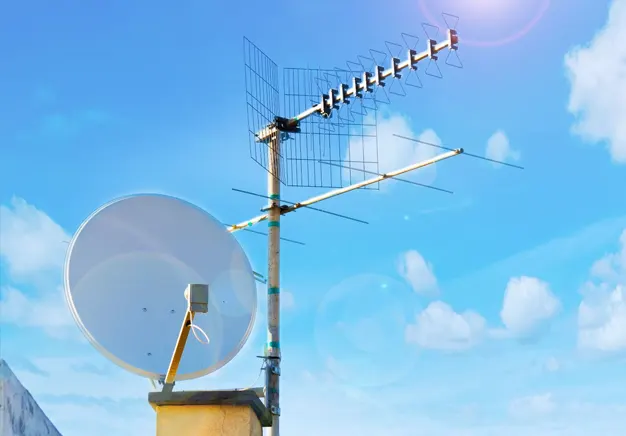
You may notice your TV picture freezing, breaking up, or disappearing during bad weather. This happens at the worst time, especially during storms or heavy rain. Weather affects both TV aerial and satellite systems because both rely on signals travelling through the air from transmitters or satellites.
Rain, strong winds, snow, and thick cloud cover can weaken or block the signal path. Satellite signals travel long distances from space, so they are more exposed to interference from heavy rain and cloud density. Aerial signals are also affected when the weather moves the aerial, bends the signal path, or creates obstacles like water or ice on the equipment.
These conditions can cause signal loss, picture distortion, sound dropouts, or complete interruption of the broadcast. The impact varies depending on signal strength, installation quality, and location. Poorly aligned equipment is affected more quickly during weather changes.
This page explains the main causes of weather-related signal problems, how they affect performance, and the practical fixes that help maintain stable TV reception.
Types of Weather that affect TV Signals
Different weather conditions impact TV signals in different ways. Each type of weather creates a unique level of interference, depending on signal strength and equipment setup. The main types include rain, wind, snow, storms, and heat.
Rain causes signal weakening due to water absorbing and scattering satellite signals. Wind affects aerial alignment and can move or tilt the dish or aerial, leading to signal loss. Snow builds up on equipment and blocks signal reception.
Storms combine strong winds, rain, and electrical activity, which creates severe signal disruption. Heat causes expansion in materials and can reduce signal efficiency, especially in older or poorly maintained systems. Each weather type directly impacts signal stability, causing interruptions, distortion, or complete loss of broadcast.
Heavy Rain
Heavy rain directly affects satellite signals through a process called signal absorption. Water droplets in the atmosphere absorb and scatter the signal as it travels from the satellite to the dish. This reduces signal strength and leads to interruptions or a complete loss of reception.
Satellite signals use high-frequency bands, which are more sensitive to rain. These higher frequencies are easily weakened when heavy rain creates dense water layers in the air. As a result, the signal cannot pass through clearly and becomes unstable.
This issue mainly affects satellite systems because aerial signals operate at lower frequencies and are less affected by rain. Satellite dishes are more exposed to rain fade, especially during strong downpours.
In most cases, the problem is temporary. Once the rain reduces or stops, the signal usually returns to normal. However, the severity depends on the intensity of the rain and the strength of the original installation.
Strong Winds
Strong winds affect TV aerials and satellite dishes through the physical movement of the installed unit. Wind pressure pushes, tilts, or slightly rotates the aerial or dish, which changes its exact position. This movement breaks the precise alignment needed for stable signal reception.
Loose mounting makes the problem worse. When brackets or fixings are not secure, the structure becomes unstable. Wind then causes gradual or sudden misalignment, leading to poor signal strength or complete loss of reception.
Even small shifts in position affect the signal direction. Satellite dishes require exact alignment with the satellite, so a minor change disrupts the signal path. This results in signal drop, picture breakup, or full interruption during windy conditions.
Snow and Ice Build-Up
Snow affects satellite signals by creating a physical obstruction on the dish surface. When snow accumulates, it blocks the signal path between the satellite and the dish. This prevents the signal from being received properly and reduces signal quality.
Ice accumulation adds extra weight to the aerial or dish. This can cause the structure to shift, tilt, or become misaligned. The added weight also stresses the mounting, increasing the chance of movement or damage.
Both snow and ice impact signal reflection and alignment. Satellite dishes rely on precise signal reflection to focus signals into the receiver. When the surface is covered, the signal cannot reflect correctly, leading to weak reception, signal loss, or complete disruption.
Storms
Storms cause severe disruption to TV aerial and satellite systems through strong winds, heavy rain, and lightning activity. These conditions can physically damage equipment, such as bending aerials or shifting satellite dishes out of alignment. Such movement breaks the required signal direction and reduces reception quality.
Storm conditions can also damage cables and connections. Heavy rain leads to water ingress, where moisture enters connectors and weakens the signal path. This causes signal instability and gradual failure of the system. In severe cases, storms lead to complete signal loss. Damaged components, misalignment, or broken cables prevent any signal from reaching the receiver. After a storm, inspection is essential. Checking alignment, cables, and mounting ensures the system remains secure and restores stable signal performance.
Heatwaves
Heatwaves affect TV signals through changes in atmospheric pressure and temperature. High temperatures alter air density, which impacts how signals travel through the atmosphere. This can weaken signal consistency and stability.
Heat can also cause signal bending and interference. Changes in air layers create unusual signal paths, which lead to distortion or weak reception. These interference patterns disrupt the direct path between the transmitter and receiver.
This issue is less common compared to rain or wind, but it still occurs during extreme heat conditions. The effect depends on temperature levels, signal strength, and equipment quality.
TV Aerial vs Satellite – Which Is More Affected by Weather?
TV aerial and satellite systems respond differently to weather conditions. Aerial systems receive signals from nearby transmitters, while satellite systems receive signals from satellites in space. This difference directly affects their sensitivity to the weather.
Satellite systems are more sensitive because signals travel a long distance through the atmosphere. Heavy rain, snow, and thick cloud layers weaken or absorb these signals. This leads to signal loss, distortion, and interruptions during bad weather.
Aerial systems are more stable because they rely on shorter signal paths. However, they are still affected by strong winds and physical interference. Wind can move the aerial, and obstacles or structural issues can reduce signal quality.
Overall, satellite systems are more affected by weather due to signal distance and frequency sensitivity. Aerial systems offer better stability in most weather conditions but still require proper installation to maintain reliable reception.
Common Signs of Weather Interference
Weather interference shows clear and repeatable symptoms on TV screens. These issues appear when signal strength becomes unstable due to changing weather conditions. The following signs indicate weather-related signal disruption:
- Pixelation on screen: Small blocks appear when the signal weakens during weather changes
- Picture freezing: The screen pauses due to unstable signal transmission
- No signal message: Complete signal loss during heavy rain, storms, or strong winds
- Channel loss: Some channels disappear when the signal strength drops below the required levels
- Intermittent signal: Signal cuts in and out as weather conditions change
These issues usually occur during or immediately after weather changes, when signal stability is disrupted.
How to Fix Weather-Related Signal Problems
Fixing weather-related signal problems depends on whether the issue is temporary or permanent. Temporary disruption occurs during active weather, while permanent issues result from damage or misalignment. A clear approach includes waiting for conditions to improve, inspecting aerial or satellite equipment, adjusting alignment, and repairing faults. This process ensures stable signal restoration and supports reliable TV aerial and satellite system performance in residential properties.
Wait for the weather to Clear
Temporary signal loss occurs during heavy rain or atmospheric interference. This is known as rain fade and does not require immediate action. The signal usually returns once weather conditions improve. Monitor signal recovery after the weather clears to confirm normal performance.
Check Aerial or Dish Alignment
Misalignment occurs when the aerial or satellite dish moves from its correct position. This can be identified through visible tilt, movement, or angle change after strong weather conditions. Signal reception depends on accurate direction towards the transmitter or satellite. Even a small shift reduces signal strength and stability. TV aerial alignment is required when the position changes to restore the correct signal direction and stable reception quality.
Inspect Cables and Connections
Loose connectors, worn cables, or damaged coaxial lines can disrupt both TV aerial and satellite signals. Weather conditions often cause cable exposure, leading to cracks, corrosion, or connection faults. Moisture entering connectors affects signal transmission and creates interruptions or complete signal loss.
Visual inspection should focus on cable joints, external wiring, and connection points at the aerial or satellite dish. Any signs of wear, rust, or water ingress indicate reduced signal performance. Properly secured and dry connections are essential for stable and uninterrupted reception.
Remove Obstructions
Obstructions such as snow, debris, or external objects can block the signal path of both TV aerials and satellite dishes. Removing these blockages restores a clear line of signal reception and improves overall performance.
Safe access is important when carrying out any obstruction removal, especially for rooftop installations. Care must be taken to avoid damage to equipment or personal injury during inspection. Blocked surfaces reduce signal reflection and prevent accurate reception. Keeping the aerial or dish clear of debris ensures stable signal transmission and consistent TV performance.
Use Signal Boosters or Amplifiers
Signal strength can drop during bad weather conditions such as heavy rain, strong winds, or storms. This leads to weak reception, pixelation, or intermittent signal loss on both TV aerial and satellite systems.
Signal boosters or aerial amplifiers are used to improve weak signal reception by increasing signal strength before it reaches the TV. These TV aerial equipment solutions help stabilise performance in areas with naturally low signal or minor weather-related weakening.
However, amplifiers have limitations. They cannot correct issues caused by misalignment, damaged cables, or physical obstruction. In such cases, the root cause must be fixed first for proper signal recovery and stable viewing quality.
How to Prevent Weather Interference
Weather-related signal issues can be reduced through proper installation and regular maintenance of TV aerial and satellite systems, especially in larger buildings where stable reception is required across multiple points. Strong fixing, correct alignment, weather-resistant mounting, and the use of high-quality components all help protect the system from wind, rain, and other environmental conditions that can affect signal quality.
In commercial TV aerial and satellite installations, long-term reliability depends on a well-planned setup and correct installation standards from the start. Systems designed for commercial use must handle higher demand and wider coverage, so secure positioning and professional-grade materials play an important role. A properly installed system helps reduce signal interruptions and ensures more consistent performance, even during frequent weather changes.
When Weather Damage Requires Professional Repair
Weather damage to TV aerial and satellite systems often goes beyond simple issues and requires expert attention. Situations such as persistent signal loss, physical damage to the aerial or dish, misalignment at height, or internal cable faults cannot usually be resolved with basic adjustments.
In these cases, a professional tv aerial and satellite installer is needed to carry out proper fault diagnosis and signal testing using specialised tools. This ensures the exact cause of the problem is identified and repaired safely, restoring stable reception and preventing further disruption caused by storms or severe weather conditions.
Frequently Asked Questions
Why does my TV Signal go off when it rains?
Rain affects satellite and aerial signals by blocking or weakening the signal path between the dish/aerial and the broadcast source
Does bad weather affect the TV Aerial Signal?
Yes, bad weather can affect TV aerial signals. Heavy rain, strong winds, or storms can weaken or disturb the signal path, causing pixelation, freezing, or temporary loss of signal.
Can wind move my TV aerial or satellite dish?
Yes, strong wind can move a TV aerial or satellite dish if the mounting is loose, old, or not properly secured.
How do I fix my TV signal after a storm?
After a storm, first check if the issue is temporary and wait for conditions to stabilise. Then inspect the aerial or satellite dish for visible movement, misalignment, or damage. Check cables and connections for looseness or water ingress. If the signal is still not restored, realign the aerial or dish and repair any damaged parts, or use a professional installer for proper fault testing and system repair.
Why is my TV pixelating during bad weather?
TV pixelation during bad weather happens when rain, wind, or clouds weaken the signal. This reduces signal strength and causes data loss. As a result, the picture becomes pixelated, freezes, or breaks up on the screen.
Do Signal Boosters help in bad weather?
Signal boosters can help in bad weather, but only to a limited extent. They improve weak signal strength when the original signal is still present.